Why kosher matters for novel ingredients
-
The consumer already exists
Fact Source Global kosher food market: US$24.46 billion in 2025, forecast US$34.07 billion by 2033 (4.23% CAGR, 2026-2033). DataM Intelligence US kosher food industry: over $12 billion in annual sales; over 12 million American consumers choose kosher products. OU Kosher 66% of Israelis keep meat and dairy separate. AgFunder News These figures come from a certifier and a market research firm. Market size estimates vary between publishers.
-
Consumers pay a premium
US retail, 2025, from USDA AMS data. Percentages are calculated by Food Tech Weekly from the source table (Southern Ag Today, Sept 2026).
Cut Kosher Conventional Boneless chicken breast $7.98/lb $3.03/lb (about 163% more) Beef loin $15.31/lb $10.59/lb (about 45% more) Ground beef $6.24/lb $5.65/lb (about 10% more) Once a product is certified kosher, any ingredient that replaces an existing one must also be certified kosher. A novel ingredient needs certification to get into certified products.
-
The certification must be recognized globally
A widely recognized certification matters. A mark buyers already know is what lets a certified product move.
Fact Source OU Kosher certifies over 1.4 million products worldwide. OU Kosher, 2025 OU-certified products are made in more than 15,000 plants in 105 countries. OU Kosher Of over 200,000 packaged food products on US supermarket shelves, the OU symbol is on close to 70%. OU Kosher -
Science and novel technology, across topics
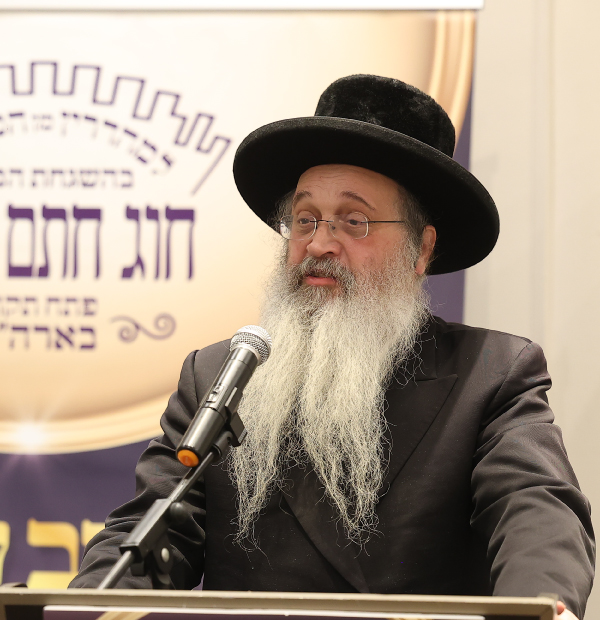
You need someone with a deep understanding of both science and novel technology, across topics. That is why Food Tech Weekly chose to partner with Rabbi Padwa as its advisor.
The ruling: Cultivated Meat and Its Kashrut
By Rabbi Pinchas Leibush Padwa, Rav and Av Beit Din of Shomrei Hadat, Antwerp; member of the Badatz of Vaadat Mehadrin. Published in Hebrew on the Tnuva kashrut site, December 25, 2023. English translation by Food Tech Weekly.
The Hebrew original is authoritative.
Summary
The article asks whether meat grown from animal stem cells is kosher, and whether it is pareve, when the cells come from a living animal or from a treifa (non-kosher) animal. It gives two grounds for permitting it:
- What the eye cannot see is not counted in halacha. A single stem cell is about a thousandth of a millimeter and cannot be seen without a large microscope. Under the rule that the Sages do not take account of what is invisible to the naked eye, halacha views cultivated meat as formed from the visible ingredients (proteins, minerals, fats and vitamins), not from the stem cells.
- The placenta is "mere waste" (pirsha be'alma). Stem cells can be taken from the blood of an animal's placenta after birth. The placenta has the status of pirsha be'alma, so cells taken from it carry no prohibition of nevela or treifa, even if the cow itself might be treifa.
The article concludes that "from these two sides it is possible to permit." It does not address whether the result is meat or pareve beyond raising the question, and it is a halachic discussion, not a certificate for any specific product.
Key passages (translated)
A. What cultivated meat is
"It is possible to take stem cells in a laboratory from any animal, add proteins, vitamins, fats and similar substances to them, and in this way the stem cells replicate again and again, many hundreds and thousands of times, until meat is formed. The question is: when a stem cell is taken from a living animal, or from a treifa animal, is the meat kosher? Is it pareve?"
"The size of one cell is a thousandth of a millimeter, and of course it cannot be seen at all, not even with an ordinary magnifying glass."
B. The halachic background: rennet
The article cites Shulchan Aruch, Yoreh De'ah 87:10-11: cheese set with the stomach of a kosher animal is permitted, and cheese set with the stomach of a nevela or treifa is forbidden. But curdled milk found inside the stomach is pirsha be'alma, so cheese set with it is permitted (Chullin 116b). The article asks why, if the same enzyme is in both, one is forbidden and the other permitted.
C. What is not seen by the eye is not considered to exist
"The Sages have an important rule: anything that is not seen by the eye is not considered to exist at all. This is because when Moses our teacher looked at the world, he did not use a magnifying glass or a microscope."
The article gives examples: lice treated as arising from sweat (Shabbat 107b), because their eggs are invisible; and worms in fish flesh treated as formed inside the fish.
"A stem cell cannot be identified by the eye. ... From the halachic view, the meat is produced from proteins, minerals, fats and vitamins, but not from stem cells, since the stem cells are so small that they cannot be identified, and therefore there is no halachic discussion about them at all."
D. The placenta is defined as mere waste
"Scientists found that stem cells can be taken from the placenta of an animal. ... It is possible that stem cells are taken from the placenta of a treifa animal, for example the placenta of a cow that had a caesarean section done without halachic supervision."
The article cites Shulchan Aruch, Yoreh De'ah 87:7, and Chullin 113b: the placenta is not subject to the law of meat and milk, because it is pirsha be'alma.
"The same applies to our case. Stem cells found within the placenta of an animal, or mixed within the placenta, are not subject to the law of nevela or treifa, since the placenta has the status of mere waste, and this includes all the cells that are not visible to the human eye."
"Even though the cell is in fact what sets the process in motion, and in the end a piece of meat is formed from it after replication and the whole process, since at the start it had the status of waste, in which there is no prohibition, ... it is no worse than setting cheese with the milk found in the stomach, which the Sages defined as mere waste, and in which there is no prohibition at all. Therefore, from these two sides it is possible to permit."
Novel ingredients already getting kosher approval
SuperMeat (cultivated chicken)
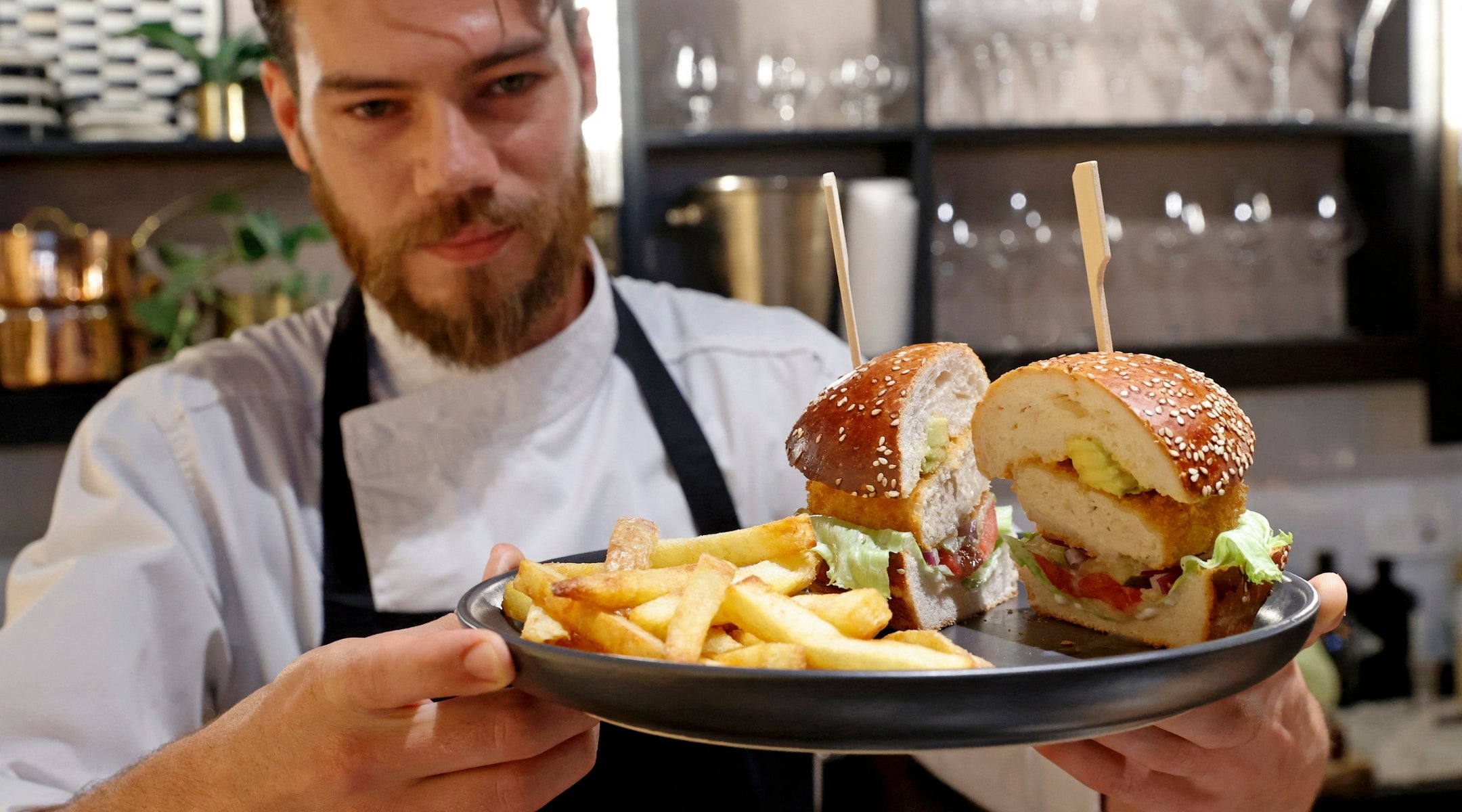
In September 2023, OU Kosher certified SuperMeat's cultivated chicken as kosher Mehadrin meat (meat, not pareve). Cells are taken from fertilized eggs.
Sources: Times of Israel, JTA
Photo: JTA
Aleph Farms (cultivated beef)
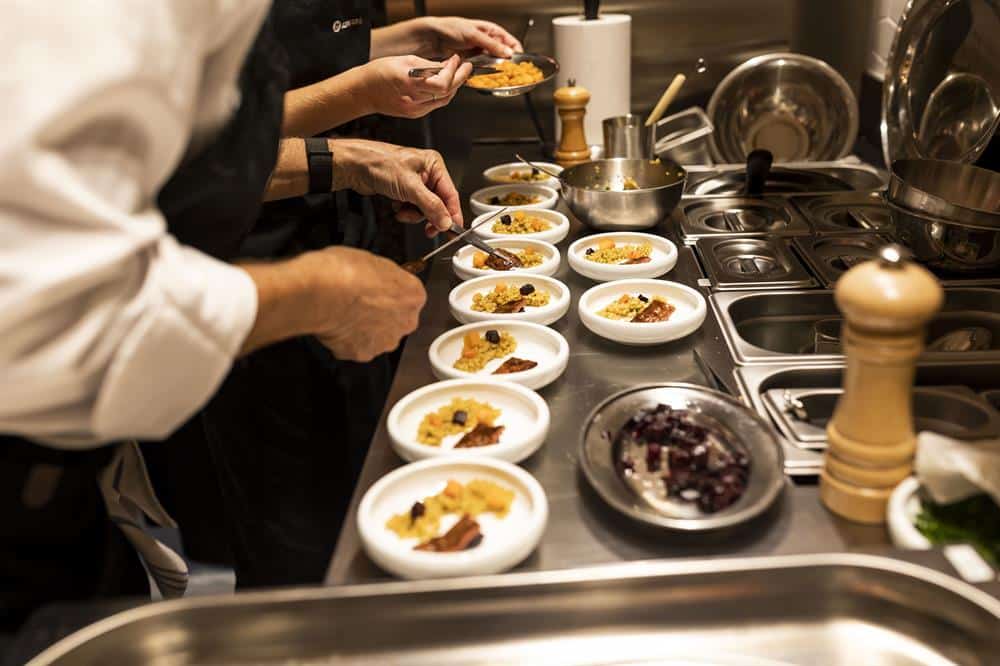
In January 2023, Israel's Chief Rabbi David Lau ruled Aleph Farms' cultivated steak kosher. This is a ruling, not a product certificate; the company said it would pursue certification for its Rehovot facility and products.
Sources: Aleph Farms, Reuters
Photo: Aleph Farms
Remilk (precision fermentation dairy protein)
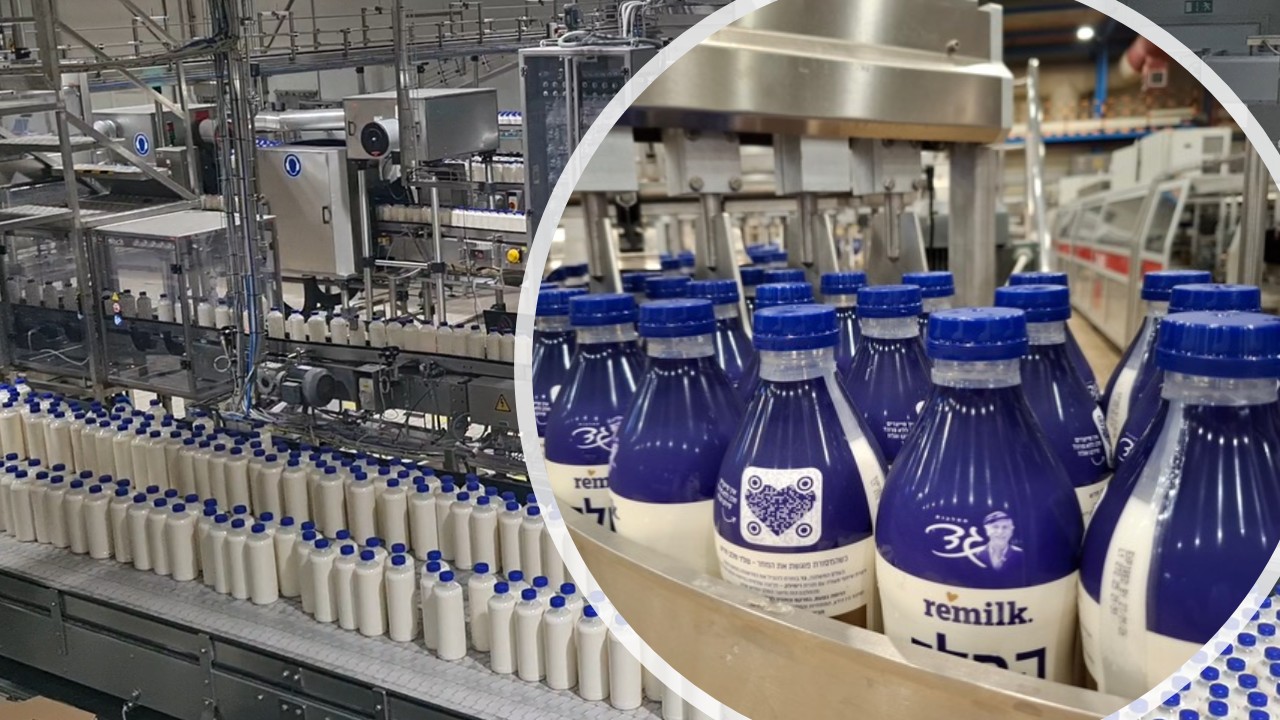
New Milk, made with Remilk's fermentation-made beta-lactoglobulin and launched with Gad Dairies in Israel, is kosher-pareve.
Source: AgFunder News
Photo: AgFunder News
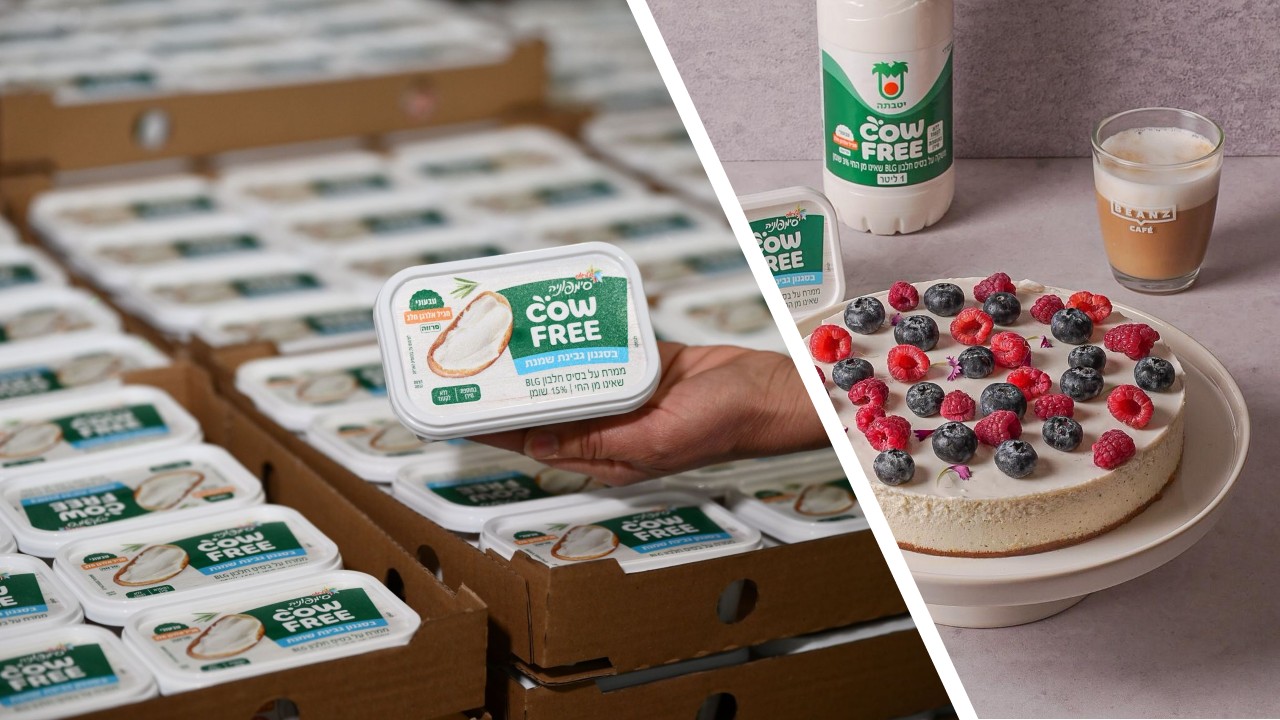
Imagindairy with Strauss Group (precision fermentation whey)
Strauss Group's cow-free drinks and cream cheese under the Yotvata and Symphony brands, made with Imagindairy's beta-lactoglobulin, are both certified kosher.
Source: AgFunder News
Photo: AgFunder News
Industry context: in September 2023, expert panels commissioned by the cultivated meat industry concluded that cultivated meat can be kosher and halal if its cells are sourced in compliant ways (Reuters).
The process
- Intro call. Tell us what you make, where, and where you want to sell.
- Process and supply chain review. The certifier reviews your full manufacturing process and supply chain: every ingredient and processing aid, cell lines or microbial strains and their growth media, equipment, and any co-manufacturers or co-packers.
- Quote. After the review, you receive a quote for the cost of certification.
- Certification and supervision. Once agreed, production is supervised on an ongoing basis. Visit frequency depends on the type of business and halachic requirements (csofer.org).
What certification opens up
- Mainstream retail shelves. In the US, the OU symbol appears on close to 70% of packaged supermarket products (OU Kosher).
- B2B ingredient buyers. Major ingredient and food companies, including ADM, Cargill, DSM, Nestle and Unilever, use OU certification (OU Kosher). Argument
An ingredient that is certified can go into these companies' certified products without slowing them down.
- Israel. 66% of Israelis keep meat and dairy separate (AgFunder News); the Israeli launches above all carry kosher status.
- Beyond kosher buyers. Many non-Jewish consumers buy kosher for perceived safety and quality (DataM Intelligence); OU cites health, food safety, vegetarianism and lactose intolerance among the reasons (OU Kosher).
Book a time with the rabbi
Send a short note with your company, product and production setup. We will set up a call and start the review.
Book a time with the rabbi